
This is the first of several introductory mini-symposia from the DSI Emergent Data Science program, Bridging the Gap: From Computational Physics, to Physics-informed Machine Learning, to Data-driven Scientific Discovery. The program aims to bring together experts in numerical simulation and data science to explore the intersection between, and bridge the gap separating, physics-based models grounded in first principles and data-driven models based on machine learning techniques.
| March 24, 2026 | |||||||||||||||||||||||||||||||||||||||||||||||||||||||||||||||||||||||||||||||||||||||||||||||||||
|---|---|---|---|---|---|---|---|---|---|---|---|---|---|---|---|---|---|---|---|---|---|---|---|---|---|---|---|---|---|---|---|---|---|---|---|---|---|---|---|---|---|---|---|---|---|---|---|---|---|---|---|---|---|---|---|---|---|---|---|---|---|---|---|---|---|---|---|---|---|---|---|---|---|---|---|---|---|---|---|---|---|---|---|---|---|---|---|---|---|---|---|---|---|---|---|---|---|---|---|
|
2:10-2:20 |
Opening Remarks
|
||||||||||||||||||||||||||||||||||||||||||||||||||||||||||||||||||||||||||||||||||||||||||||||||||
|
2:20-2:50 |
Adventures with Directed Acyclic Graphs in Gravitational Wave Astrophysics Professor Reed Essick, Canadian Institute for Theoretical Astrophysics, David A. Dunlap Department of Astronomy & Astrophysics |
||||||||||||||||||||||||||||||||||||||||||||||||||||||||||||||||||||||||||||||||||||||||||||||||||
|
2:50-3:20 |
Merging Observational Data and Magnetohydrodynamics: A Variational Data Assimilation Approach for the Solar Wind Professor Clinton Groth, Institute for Aerospace Studies, Faculty of Applied Science and Engineering |
||||||||||||||||||||||||||||||||||||||||||||||||||||||||||||||||||||||||||||||||||||||||||||||||||
|
3:20-3:50 |
Data Science Challenges in Multiphysics of Cerebrovascular Blood Flow Dynamics
Professor David Steinman, Institute of Biomedical Engineering, Faculty of Applied Science and Engineering |
||||||||||||||||||||||||||||||||||||||||||||||||||||||||||||||||||||||||||||||||||||||||||||||||||
|
3:50-4:00 |
Closing remarks |
||||||||||||||||||||||||||||||||||||||||||||||||||||||||||||||||||||||||||||||||||||||||||||||||||

Reed Essick
Canadian Institute for Theoretical Astrophysics, David A. Dunlap Department of Astronomy & Astrophysics, University of Toronto
Professor Essick has worked on many aspects of gravitational-wave astrophysics, including data quality and calibration, low-latency localization and alert infrastructure for multi-messenger follow-up, and astrophysical interpretation and population inference. His current interests lie in constructing robust, self-consistent hierarchical inference schemes and other statistical techniques to improve the interpretability of GW data. Recently, he developed flexible models to constraints of the neutron star equation of state and used GW detectors to observe daylight savings time. He was a KICP fellow at the University of Chicago and a senior postdoctoral fellow at the Perimeter Institute before joining the faculty at the Canadian Institute for Theoretical Astrophysics in 2022.

Clinton Groth
Institute for Aerospace Studies, Faculty of Applied Science and Engineering, University of Toronto
Professor Groth is a theoretical and computational fluid dynamicist with expertise in high-performance computing/parallel algorithm design, adaptive mesh refinement (AMR), and finite-volume schemes for both compressible non-reacting and reactive flows. He has expertise in the computation of non-equilibrium, rarefied, and magnetized flows, and the development of generalized transport models and solution methods following from kinetic theory. His research in numerical methods currently focuses on output-based anisotropic AMR for both steady and unsteady flows, high-order spatial and temporal discretization methods for flows with shocks, complexity reduction via moment closure methods, and data assimilation methods for performing data-driven simulations.
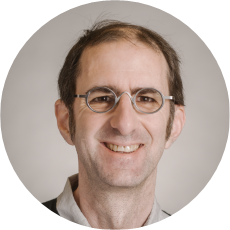
David Steinman
Institute of Biomedical Engineering, Faculty of Applied Science and Engineering, University of Toronto
Professor Steinman is recognized as a pioneer in the integration of medical imaging and computational fluid dynamics (CFD), and its application to the study of cardiovascular diseases. Steinman co-founded the Vascular Modelling ToolKit (VMTK), and has led numerous international image-based CFD challenges. For nearly two decades he was supported by competitive salary awards from the Heart & Stroke Foundation, and in 2012 was named a Fellow of the American Society of Mechanical Engineers. He is an Associate Editor for the Journal of Biomechanics and the Journal of Neurointerventional Surgery.