

This summer, machine learning models created by participants in a series of DSI-supported bootcamps will be used to identify drug-like hit molecules from commercial libraries – and DSI funds will allow the team to purchase the predicted molecules and test them experimentally in the lab.
“A hit molecule is a first instance of a bioactive molecule,” explains Prof. Matthieu Schapira (Department of Pharmacology and Toxicology, Temerty Faculty of Medicine, University of Toronto; PI, Structural Genomics Consortium), one of the co-leads of Galvanizing Data Science Applications in Early Stage Drug Discovery. “That’s one of many areas where AI can have an impact in drug discovery. Here, it’s really focused on finding chemical hits, but the whole drug discovery pipeline is going to be impacted by AI. This particular program is focused on one of the earliest steps.”
To date, almost 200 people have completed the CrossTALK: Cross-Training in AI and Laboratory Knowledge for Drug Discovery bootcamps on data science for hit-finding, or designing drug-like molecules for a given protein target. The training enables trainees from biological sciences to learn about machine learning and its data needs, while trainees from the computer sciences experience the nuances of chemical and biological data. The hope, says Prof. Schapira, is to foster a new generation of scientists who understand both languages and thought processes.
AI’s impact on drug discovery is just one of the emergent areas of data science supported by the Data Sciences Institute. These interdisciplinary areas advance the data sciences by pursuing the next big-but-yet-unknown data-driven field or computational or analytic breakthrough in interdisciplinary areas where the University of Toronto excels. The DSI’s Emergent Data Sciences Program funds activities and provides administrative support to coordinate events, communications, and programming, as well as grant-writing support.
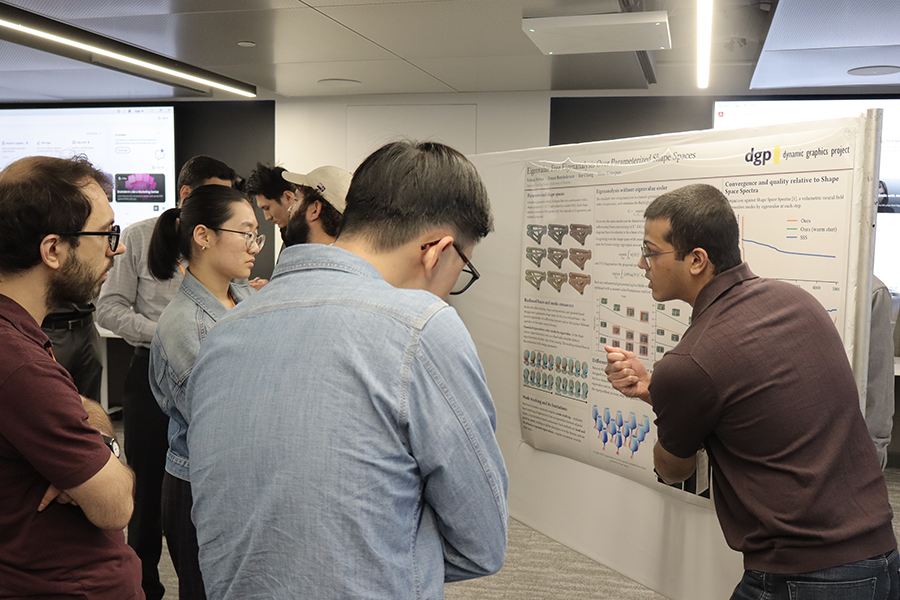
“Bringing people together for collaborative generation and application of new ideas in the data sciences is a core part of DSI’s mission,” says Prof. Meredith Franklin, DSI Associate Director, Joint Initiatives. “From law, public policy and economics, to biophysics, aerospace studies, pharmacology and beyond, the Emergent Data Sciences Program has touched on an inspiring range of disciplines – and we hope to see that breadth continue to grow. We’ve seen how these collaborations between methodologists and other researchers set the stage for essential dialogue and future impacts including grant proposals and expanded programs.”
Currently, there are three active Emergent Data Science Programs: Bridging the Gap: From Computational Physics, to Physics-informed Machine Learning, to Data-driven Scientific Discovery, Advancing Aging and Neurodegeneration Research through Data Science, and Galvanizing Data Science Applications in Early Stage Drug Discovery.
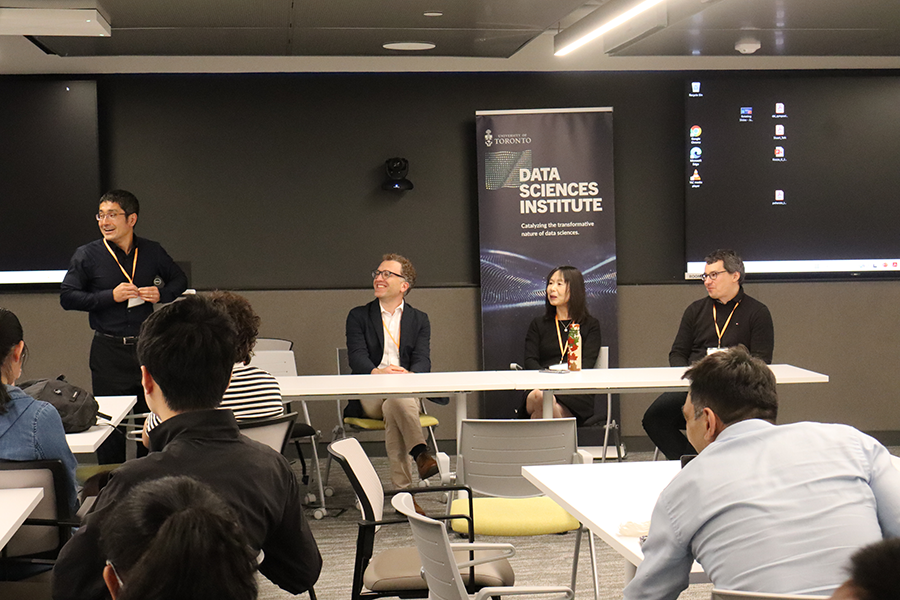
Bridging the Gap: From Computational Physics, to Physics-informed Machine Learning, to Data-driven Scientific Discovery is the newest of the three programs. It brings together experts in numerical simulation and data science to explore the intersections and bridge the gap between physics-based models based on first principles in sciences and engineering, and data-driven models based on machine learning techniques.
Since March 2026, three mini symposia and a two-day conference have brought together over 200 participants from across U of T and internationally, enabling collaboration and driving research towards truly predictive simulation capabilities that guide scientists and engineers making crucial decisions with high societal impact, ranging from sustainable design to medicine to astrophysics.
Advancing Aging and Neurodegeneration Research through Data Science addresses challenges in accelerating the impact of AI in clinical settings through engagement with diverse audiences, including talks by renowned researchers in brain and body imaging and a workshop on Advanced Data Science Approaches to Studying the Aging Brain. These collaborative opportunities bring together data scientists, clinicians, and educators, to discuss the development of new areas of research that can ultimately benefit the treatment, care, and healthcare service delivery for older adults.
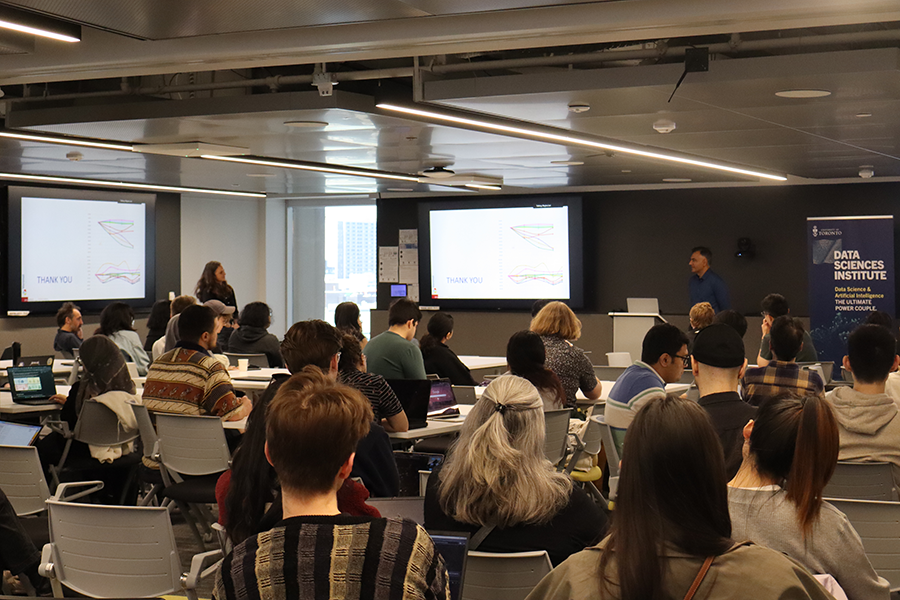
As for the Galvanizing Data Science Applications in Early Stage Drug Discovery program, Prof. Schapira highlights that what the program has achieved with DSI’s support is just the beginning. “Every time I talk about this with professors in other Canadian universities, they are super excited to say they want to be a part of the next phase. And so I’m confident that we could put together more Canadian programs to do this. It needs to be embedded within departmental activities to be sustainable and with long-term funding. And I’m pretty confident we’re going to get there.”
Applications are now open for the Emergent Data Sciences Program. Letters of Intent are due November 20, 2026.