
Thank you to our sponsors


The data science and AI community was aglow on January 22 as a standing room only crowd of industry leaders, researchers and top data science and AI talent gathered for the Talent Showcase at the University of Toronto Data Sciences Institute (DSI).
The Data Sciences & AI Talent Showcase is a unique opportunity for companies and organizations to build new connections with emerging data researchers equipped with cutting-edge skills. This is a way to engage with talent beyond resumes and interviews – companies can see talent in action.
Representatives from organizations across a range of sectors engaged with DSI scholars trained in data sciences, and AI methods and tools that align with industry needs. Industry Partner AstraZeneca Canada, sponsors BMO and Global Affairs Canada brought with them opportunities to recruit, collaborate and connect, and shared perspectives and opportunities.
The poster session showcased applied research from undergraduate and doctoral students, and postdoctoral fellows. Drawn from across the U of T and research institute partners, their projects spanned AI and ML, health and genomics, environment and sustainability, policy and governance, and the physical sciences.
For Sejal Bhalla, a DSI Doctoral Student Fellow who presented Utilizing Speech as a Biosignal for Monitoring Respiratory Health and Beyond, the Showcase was an opportunity to learn from peers and multiple industry perspectives. “I work a lot on health monitoring, and I wanted to learn what kind of career options AstraZeneca Canada offers, what kind of research, what kind of R&D they are invested in right now, and find where there’s an overlap. And it was also interesting to see Global Affairs Canada and see both an industry and government perspective, see what kind of things the government is doing within the data science and AI space.”
Noor Khan, a Summer Undergraduate Data Science (SUDS) Scholar, prepared her poster, Examining the Impact of Built Environment Factors on Breast Cancer Risk among BRCA Mutation Carriers in Canada by applying the skills she developed through SUDS.
“Through SUDS I learned a lot about programming, Python, different languages that I could use. I also learned a lot about machine learning and different data science elements that apply to my own research at Women’s College Hospital.”
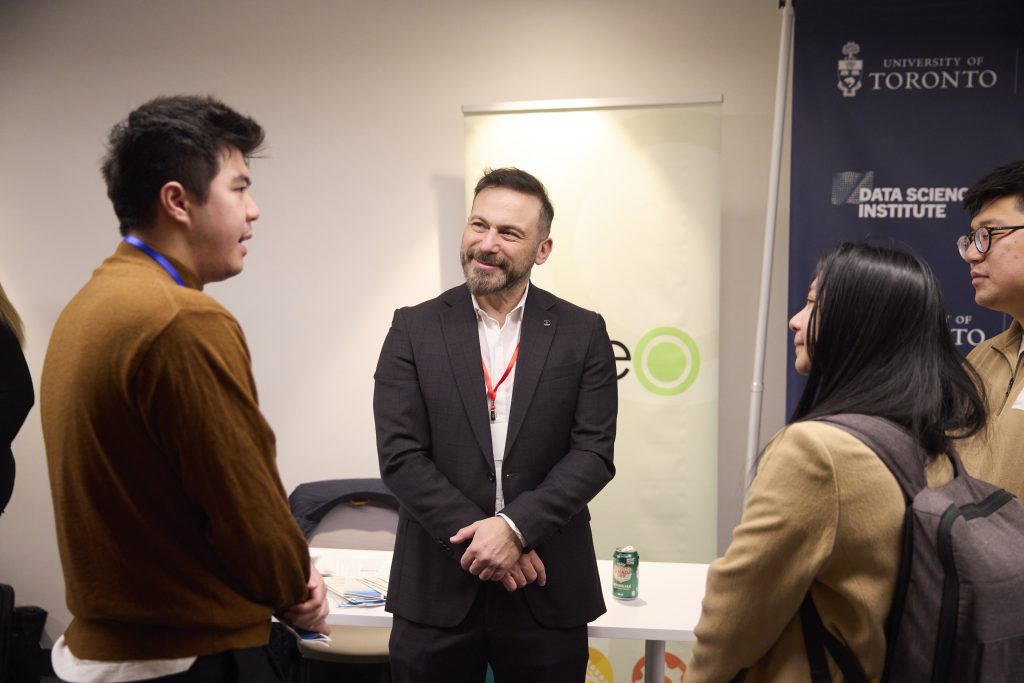
Dr. Nardin Samuel delivered the keynote, reflecting on the transition from academic research to real-world application, with a focus on identifying meaningful research gaps and translating scientific insight into practical tools. Dr. Samuel is a physician-scientist, neurology resident, and the visionary CEO & Co-founder of Cove Neurosciences, a groundbreaking software venture transforming how brain data is analyzed. Drawing on her experience working at the intersection of neuroscience, data science, and technology, she discussed the lessons learned from navigating commercialization without formal business training.
The Showcase featured Daniel Smedley, Vice President, Innovation & Business Excellence and IT at AstraZeneca Canada, a DSI Industry Partner. AstraZeneca Canada is collaborating with — and investing in — emerging talent who share their vision of using data to transform science and deliver life-changing medicines.
“At AstraZeneca, we build, buy and use AI across all parts of our business, and robust data is critical in achieving our AI ambition,” says Smedley. “For any type of data role at AstraZeneca Canada, technical ability is the foundation, but that’s paired with the ability to engage with a wide stakeholder set, understand the problem that we’re trying to solve, and to work cross-functionally and collaborate with each other to make it happen. We are so pleased to be here today to connect with emerging talent whose applied research shows that same vision of using data to solve problems that matter.”
Partnering with the DSI enables AstraZeneca to create greater patient impact through pharmaceutical innovation shaped by data, AI, and advanced analytics. Through this partnership, AstraZeneca plays a key role in the DSI Talent Showcase, Industry Speaker Series and as a partner for collaboration.
Leadership from sponsors BMO Canada and Global Affairs Canada were also looking to recruit from among DSI-affiliated undergraduate and doctoral students, and postdoctoral fellows.
Madeleine Bonsma-Fisher, a DSI Postdoctoral Fellow whose poster, Bicycle route choice modelling in Toronto, won the Showcase prize for Outstanding Research Question and Impact, reflected on what it meant to be part of the showcase after her win.
“It’s so nice to be at an event like this where there’s people from all different sectors, like industry, government, research, across so many disciplines. It’s a really energizing space and it’s just great to be a part of it. It’s a pleasure to talk about my research and talk to curious people who are doing so many cool things.”
Lisa Strug, Director, Data Sciences Institute, reflects on the Showcase’s impact. “The inspirational Showcase is a testament to DSI’s mandate to help shape the evolution of the data science field and the University of Toronto’s leadership role bringing data science and AI training to new domains and organizations.”
The Data Sciences Institute welcomes industry leaders ready to be part of future collaborations. Our Industry Partnership model connects industry leaders with top-tier data science, fostering collaboration through industry engagement and trainee development opportunities. Organizations gain direct access to exceptional students and researchers, strengthening their presence in the next generation of data-driven talent. See our Industry Partnership Model and contact parterships.dsi@utoronto.ca to get started.
Photos by Harry Choi.
Thank you to our sponsors
The Data Sciences Institute’s (DSI) Summer Undergraduate Data Science (SUDS) Opportunities Program celebrated the achievements of its 2025 cohort with the annual SUDS Showcase – an exciting full day of research project presentations and poster sessions by 60 undergraduate students.
Designed as a marquee event to close the SUDS year of study, the Showcase provides a forum for SUDS Scholars and Supervisors to share their data science research.
Javier Mencia Ledo, SUDS 2025 Scholar, whose research Risk factors and Early Prediction of Labour Force Dropout in SLE Patients: Integrating Longitudinal Deep Learning through an LSTM RNN with Random Forests, focused on a neural network that detects early warning signs of disability in lupus patients, allowing timely support for interventions. Supervised by Professor Behdin Nowrouzi-Kia (Department of Occupational Therapy and Occupational Science, Temerty Faculty of Medicine), Javier worked in the Rehabilitation Sciences Through Occupational Research & Engagement (ReSTORE) Lab.
“Being part of SUDS has been such an invaluable experience,” said Ledo.
“I got to hear the stories and learn from incredibly talented people working in both industry and academia, and contribute to many impactful projects at the ReSTORE Lab. It confirmed that I want to pursue this career path in grad school.”

“The SUDS Showcase is a highlight, creating an opportunity for scholars, supervisors and the broader DSI community to view and discuss the various data science methods, including AI, applied across a broad range of areas,” said Professor Laura Rosella, DSI Associate Director of Education and Training.
“Under the supervision of U of T and affiliated external partner researchers, students applied data science methods and tools to research on locating genetic ancestors with ancient DNA, integrating predictive analytics into an equity dashboard and finding substructures within the Milky Way with geometric deep learning.
“Elise Corbin and Al Ali Abdulmohseen collaborated in the presentation, Piccard: An Open-Source Tool to Analyze Longitudinal Data without Geographic Harmonization, detailing the development of a Python package that applies graph networks to census data visualization and analysis. Their research was supervised by Professor Fernando Calderón Figueroa (Department of Human Geography, University of Toronto Scarborough).
“SUDS was like a dream job for me,” said Corbin. “I really enjoyed a flexible schedule, and I felt like I was doing important work that could really improve people’s lives down the line.”
“My collaborator, supervisor, and I hope to publish the results of our work as well, which is an added bonus. I recommend SUDS as the perfect opportunity to gain research experience, experience life in the data science workforce, and possibly even get published!”

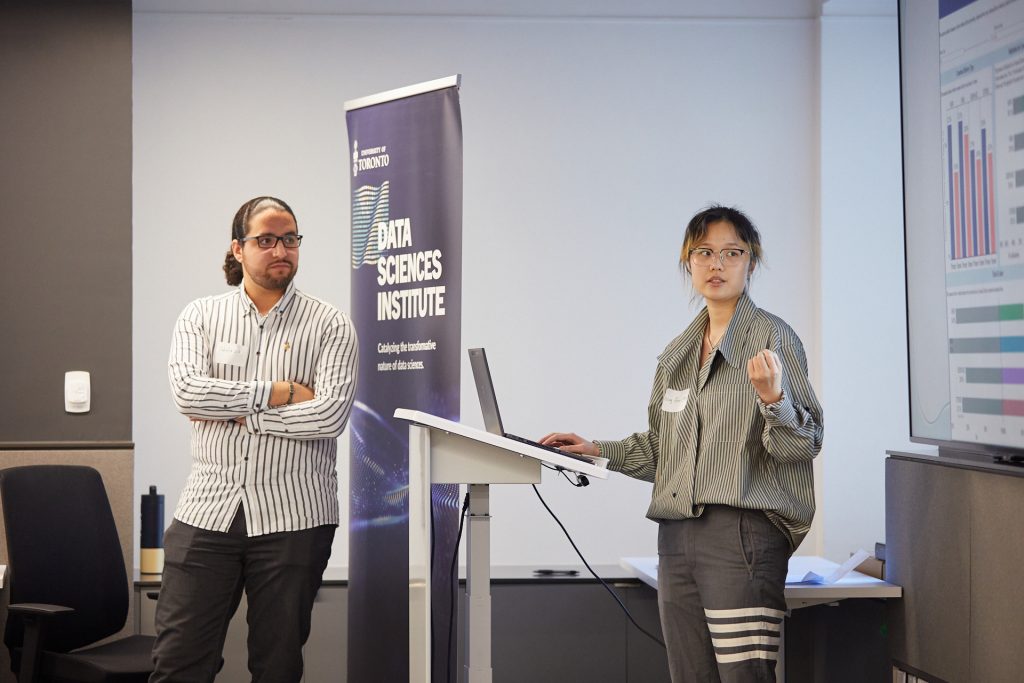
(L-R) Matthew Tamura, Shan (Angelina) Zhai, Professor Shion Guha (Faculty of Information, University of Toronto) worked on the Children’s Aid Society MITACS project
SUDS provides a rich summer training experience for students from a wide variety of academic backgrounds to be exposed to and apply data science techniques in their work.
Two SUDS Scholars from the University of Toronto had the opportunity to intern at Children’s Aid Society of Toronto, thanks to Mitacs funding. This collaboration is part of the larger DSI initiative for Data-driven Decisions & Discovery: Innovation for Transformative Impact. Through these strategic partnerships, DSI connects organizations with skilled undergraduate talent to advance high-impact, data-driven projects. With Mitacs support, partners can accelerate innovation by engaging top U of T students over the summer.
“The MITACS Accelerate program has been instrumental in bridging academic research with real-world impact,” said Prof. Shion Guha (Faculty of Information and Department of Computer Science, U of T).
“For example, through our partnership with the Children’s Aid Society of Toronto, two outstanding undergraduate SUDS Scholars are contributing to data-driven solutions in the child welfare sector, gaining invaluable experience while shaping socially responsible technology.”

The 27 students from the King Abdullah University of Science and Technology (KAUST) Academy, recipients of prestigious awards from KAUST, were selected through a highly competitive process to participate in SUDS. This marks a near doubling from last year’s SUDS KAUST cohort, reflecting growing interest and momentum. KAUST specifically sought out the University of Toronto for this collaboration due to its world-renowned ranking in data science.
“The SUDS Scholars were excellent, and it was great to see them present their research, building on the data science skills they have learned this summer,” said DSI supervisor Zahra Shakeri, (Dalla Lana School of Public Health, University of Toronto).
“They worked closely with the clinician in the team and other team members to explore a timely data science problem, providing valuable insights and framing directions for future investigation.”
Along with their research projects, SUDS Scholars partake of the SUDS Cohort programming for networking, academic and professional development. This includes the Data Science@Work Series, where representatives from the private sector and government organizations share data science applications in the workplace. The scholars began in May with the DSI Data Science Bootcamp, gaining proficiency in data science skills including Unix Shell, R, Python, and machine learning.

A highlight of the 2025 Showcase was keynote speaker, Prof. Rachel Harding (Department of Pharmacology and Toxicology, Temerty Faculty of Medicine, University of Toronto; Principal Investigator, Structural Genomics Consortium), who spoke on the topic of Protein–Ligand Data at Scale: Foundations for Machine Learning in Drug Discovery. Does that work?
“The SUDS program offers a rare and powerful blend of technical training, critical thinking, and applied experience,” said Guha.
“As a faculty mentor, it’s been deeply rewarding to witness students grow into thoughtful, industry-ready researchers committed to ethical data science.
Distinction in the poster category was given to scholars Amjad Albawardi, Tabris Cao, Abdulaziz Alkharjy, Anas Alshehri and Mehtab Cheema, while Noor Khan, Matthew Tamara and Shan (Angelina) Zhai were recognized for their standout presentations.
Photos: Cormac Rea

At once navigating both the hazards of high-volume car traffic and dilapidated or non-existent urban biking infrastructure, many cyclist commuters in Toronto and Montreal – among other major cities in North America – are well used to running a deadly gauntlet morning and night.
Funded by a Data Sciences Institute catalyst seed grant and co-led by investigators’ Brice Batomen Kuimi (Assistant Professor, Dalla Lana School of Public Health) and Marianne Hatzopolou (Professor, Department of Civil and Mineral Engineering, Faculty of Applied Science and Engineering), Eye on the Street: Using computer vision to capture the determinants of road safety is an innovative project that can contribute to solving the inner-city cycling issue.
The research aims to evaluate several municipal initiatives under Vision-Zero Plans related to road safety and active transportation. Specifically, the project leverages image recognition algorithms to develop a comprehensive database detailing the installation of traffic calming measures across major Canadian cities.
“Getting the DSI funding was very important to building connections, building our team, and getting some initial findings, which has in turn helped us get further funding,” said Brice Batomen. “It’s helped greatly to show credibility of the idea, to bring this work to a bigger stage and to really begin to scale up everything.”
Photo: Harry Choi Photography
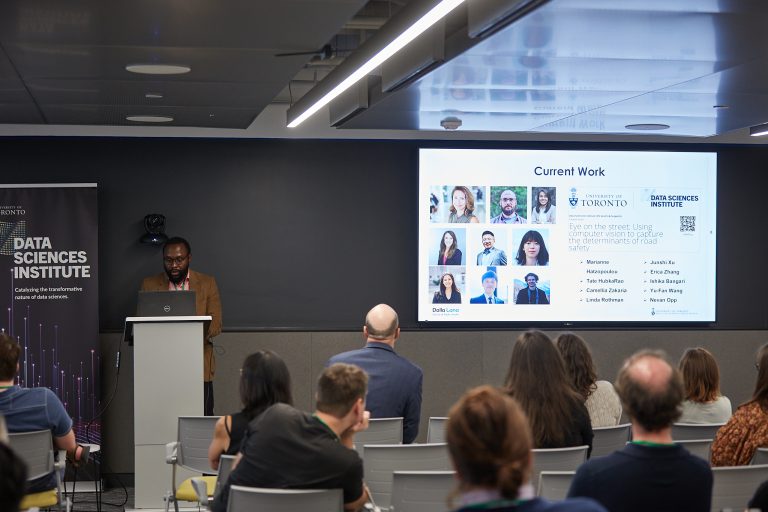
With a goal of evaluating existing data – as well as filling in missing data gaps – on cycling infrastructure and traffic calming measures in certain wards and boroughs of Toronto and Montreal, Eye on the Street is helping develop a more complete picture of road use in these metro hubs to help inform future urban planning.
“People always make mistakes while driving,” said Batomen.
“The idea is that a mistake should not lead to a fatal injury or a very serious injury. So, the urban planning and policy thinking is, how can we help redesign the street to first reduce collisions but also reduce the likelihood of a serious injury in the case of a collision. At the same time, we want to promote active transportation, like walking and cycling more, kids walking to school.”
“As an epidemiologist, I want to evaluate if these measures. Do we see change – less collision, less injury, less mortality – after measures are put in place?”
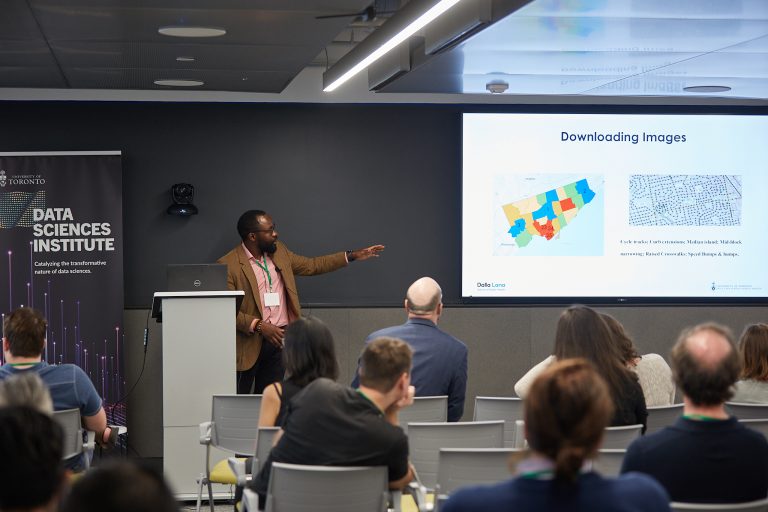
Vulnerable road users are defined as those without rigid barrier protection, such as pedestrians, cyclists, and motorcyclists. Perhaps unsurprisingly, they represent one third of all traffic related deaths in Ontario.
Although several North American cities are implementing physical modifications of the road network to try and help make it safer, including cycling networks, horizontal deflections, vertical deflections and road narrowing and traffic diversions, the impact of these interventions remains insufficiently evaluated due to a lack of comprehensive data on locations and implementation dates.
“In order to evaluate the effectiveness of these measures, you need to know what was there before, compared to what is present now.” said Batomen. “We need to know where and when the interventions were made, such as where did we put the speedbumps? Where are we putting cycling track?”
“Of course, we can go to the city and use their open-source maps or request a document to determine when work was done, but it can take time and there can be data missing. But if we use machine learning, we can train a computer to identify objects in images (ie. dog, cat, speedbump). We can provide the computer with tens of thousands of historical street view images of the same street from over a decade and it can determine important changes and timing that can then help fill in missing data sets that can then be compared and evaluated.”
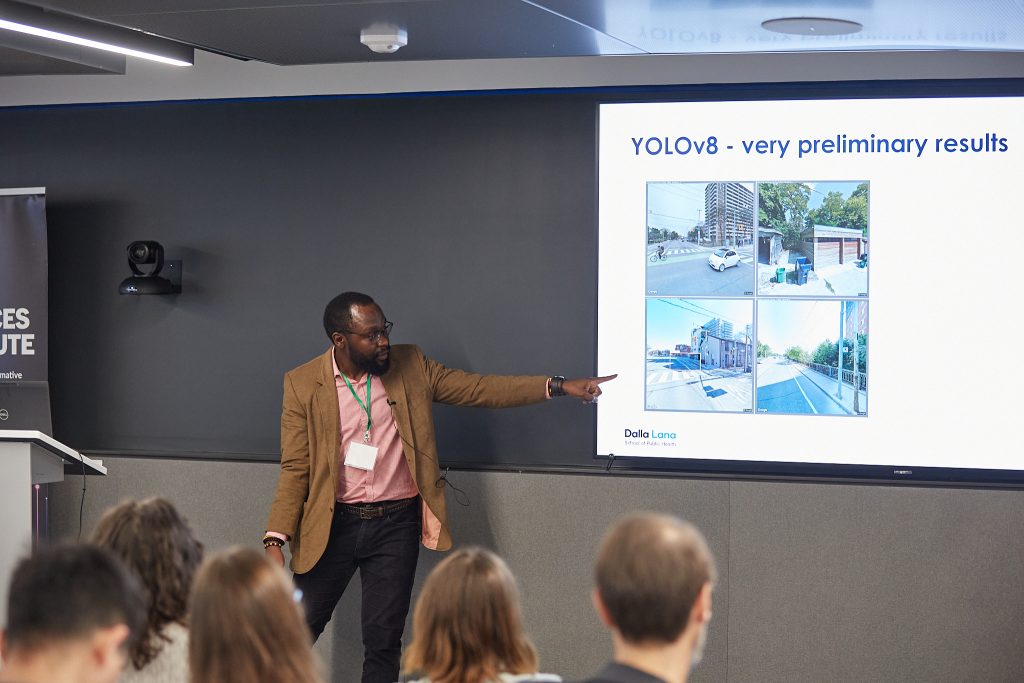
The Eye on the Street project has three main objectives: a) comparing machine learning algorithms in terms of their accuracy in identifying elements of interest in a streetscape environment, b) creating a publicly accessible geodatabase of streetscape environments, and c) evaluating the causal relationships between built environment features and traffic injuries. Prof. Batomen has also supported a student through the DSI Summer Undergraduate Data Science (SUDS) research opportunities to study the impact of automatic speed enforcement on road safety disparities in Guelph.
“The Eye on the Street project is a prime example of the type of work that the Data Sciences Institute’s Catalyst grants are meant to support,” said Gary Bader, DSI Associate Director, Research and Software.
“This project combines the strengths of big data science, machine learning, transportation engineering, and epidemiological approaches to address an important population and environmental health challenge, which is transportation safety.”
Photo (L-R): SUDS scholars Tejas Balaji, Minh Dang, Farah Mikati; Sumaiya Hossain, DSI Partnership & Business Development Officer
A team of Summer Undergraduate Data Science (SUDS) scholars recently embarked on a transformative journey in their careers, utilizing a forward-thinking initiative between University of Toronto’s Data Sciences Institute (DSI) and Ernst & Young (EY) with funding support from Mitacs.
The data-driven EY Project, Leveraging Data Science to Build Consulting Specific Solution Offering, brought together three SUDS scholars to work on the project at EY during the summer. The project’s focus is developing data science go-to-market solutions for some of EY’s target industries, aiming to build AI-based assets intended for wider commercial application.
EY is a leader in assurance, tax, transaction, and advisory services, harnessing data analytics and artificial intelligence to offer innovative consulting solutions. EY’s focus on industry-specific solutions is meant to generate broad economic benefits, improving market competitiveness and efficiency across sectors beyond those targeted in this project.
The SUDS EY collaboration showcases EY’s commitment to innovation through data science and also serves as a model for other companies considering similar collaborations.
“The quality and calibre of work by the SUDS scholars was outstanding,” said Shawn Sigesmund, EY Canada SAP National Practice Co-Leader.
“They hit the ground running with regards to their positive attitude and how they were able to so quickly and seamlessly fit into the EY workplace. The students immediately started adding value and contributing to delivering client work.”
Throughout the summer, the SUDS scholars applied their data science skills to EY’s project, gaining hands-on experience while simultaneously refining their technical and professional competencies. The SUDS scholars’ journey began with a data science bootcamp in May, providing them with essential technical skills, such as data analysis, machine learning, and visualization techniques. In addition to these foundational tools, they received professional development through the SUDS Cohort programming.
“The internship has greatly enriched my learning and career aspirations,” says SUDS scholar, Farah Mikati.
“The experience I gained has enhanced my skills and solidified my commitment to pursuing a successful career in the data science field.”
“I joked with everyone that the opportunity to work with EY and DSI felt like a gift from the sky,” said SUDS scholar, Minh Dang.
“It has significantly helped me grow my technical, interpersonal, and business skills in a professional environment.”
This collaboration is part of the larger DSI Mitacs initiative for Data-driven Decisions & Discovery: Innovation for Transformative Impact. This initiative highlights the growing importance of data science in industry and demonstrates the significant potential of industry-academic collaboration.
In addition to funds from MITACS, one of the key advantages of the SUDS-Mitacs partnership opportunity is the streamlined application process for fast-tracked projects. With DSI’s assistance, the application process for Mitacs funding has a remarkably fast turnaround time of just two weeks to receive project approvals after proposal submission to Mitacs. Companies benefit from this efficiency, allowing them to focus on innovation rather than administrative hurdles.
DSI also plays a critical role in finding a faculty supervisor for each Mitacs project, ensuring that interns receive the academic guidance necessary for success. These faculty connections can lead to long-term partnerships between companies and U of T researchers, opening the door to larger projects.
“This successful collaboration highlights the benefits of partnering with DSI for Mitacs projects. Companies gain access to top-tier talent through the SUDS, which offers rigorous technical and professional training,” highlights Sumaiya Hossain, DSI Partnership & Business Development Officer.
Is your company interested in leveraging data science for innovative solutions? Partnering with DSI through Mitacs is a strategic move that capitalizes on government funding to lower costs, which can yield immediate results and foster long-term growth.
Interested in learning more? Contact DSI today to explore how a SUDS-Mitacs collaboration can benefit your organization.
Photo: 14 KAUST scholars at 2024 SUDS Showcase with Kingdom of Saudi Arabia’s Ambassador to Canada, Her Excellency Amal Yahya al-Moallimi
By: Cormac Rea
Photos: Harry Choi Photography
In a groundbreaking initiative that bridges continents and fosters global collaboration, the University of Toronto’s Data Sciences Institute (DSI) partnered with the King Abdullah University of Science and Technology l(KAUST) Academy to provide 14 exceptional Saudi scholars with the opportunity to engage in cutting-edge data science research in the 2024 cohort of the Summer Undergraduate Data Science (SUDS) Research Program.
Not simply an educational exchange, the DSI-KAUST partnership is an investment in the future of Saudi Arabia, aimed at cultivating a new generation of leaders equipped with the skills and knowledge to drive innovation and national development.

“The DSI-KAUST partnership is a catalyst for innovation, empowering students from both institutions to lead in data science and solve real-world challenges,” said KAUST Academy Director, Sultan Albarakati.
The scholars, recipients of prestigious awards from KAUST, were selected through a highly competitive process, ensuring that only the highest performing students were chosen to represent the Kingdom on a global stage.
KAUST specifically sought out the University of Toronto for this collaboration due to its world-renowned ranking in data science.
“The DSI SUDS program at U of T selects data science research opportunities, providing a comprehensive cohort program that includes both data science and professional development skills,” explained DSI Executive Director, Lisa Strug.
“KAUST requested that its scholars focus on data science and bioinformatics research projects, aligning with the strategic needs of Saudi Arabia. The DSI-KAUST partnership underscores a mutual commitment to nurturing the next generation of global data scientists.”
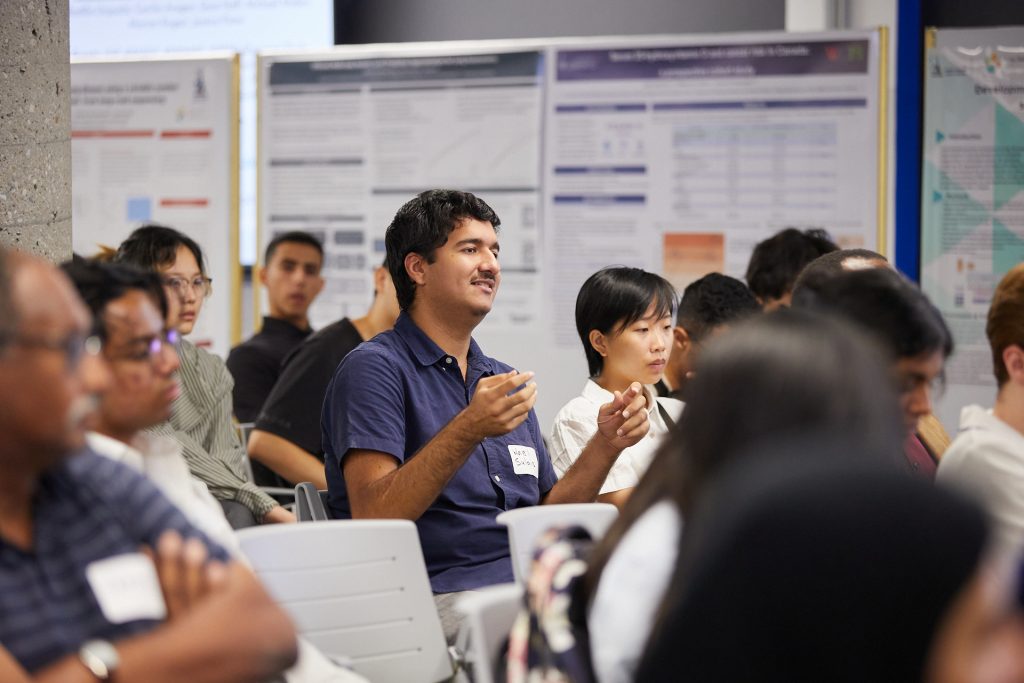
The work of KAUST Academy and SUDS scholar, Fatemah Alsolaiman, focused on evaluating transcript-guided cell segmentation in GBM-derived single-molecule spatial transcriptomics data. The main goal was to enhance an understanding of glioblastoma (GBM) by analyzing gene expression, cell patterns, and the structure and organization of tumor cells through advanced cell segmentation methods.
“As an international SUDS scholar, I feel incredibly fortunate to be part of this institute and the University of Toronto,” said Alsolaiman.
“I have had the opportunity to work with expert researchers such as Dr. Bader and Dr. Shamini at the Bader Lab within the Terrence Donnelly Centre for Cellular & Biomolecular Research. Their support and encouragement have been invaluable, motivating me to push the boundaries of my research.”
Scholar Faisal Alkulaib’s project entitled Enhancing Named Entity Normalization in Biofactoid Using NLP Techniquesaimed to improve the accuracy of bioentity normalization in the Biofactoid web tool by leveraging natural language processing (NLPs) to reduce common errors. This enhancement is crucial for creating reliable, curated biomedical data, which in turn can provide deeper insights into cellular processes and potential therapeutic opportunities.
“Participating in this program as a SUDS Scholar from KAUST has been incredibly enriching,” said Alkulaib. “The diverse perspectives boosted my research skills and network—and yes, my caffeine addiction too!”
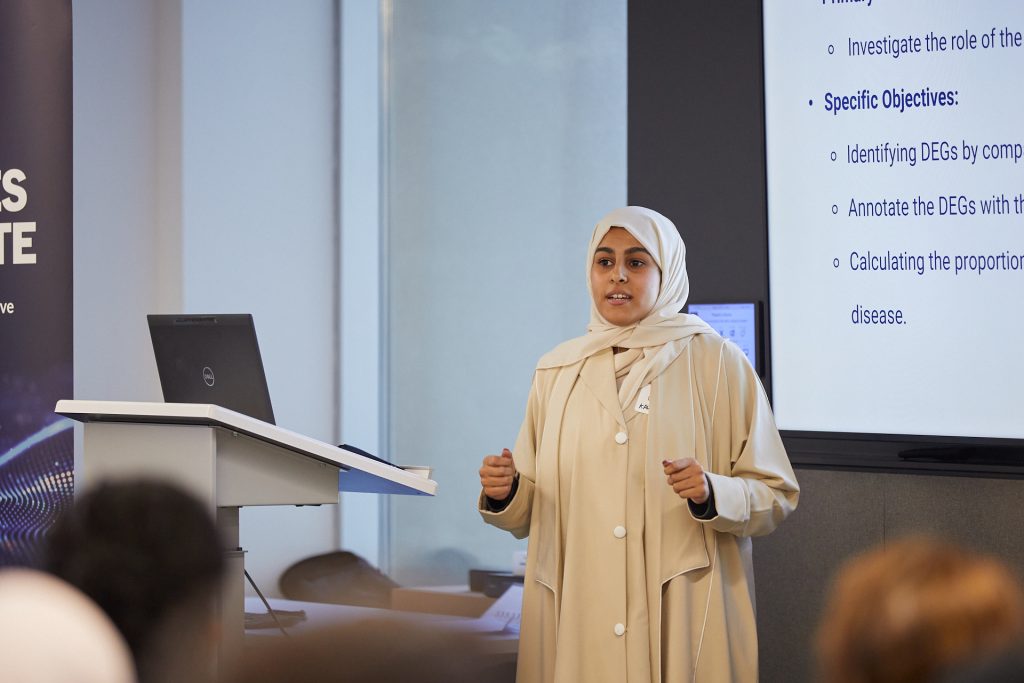
Rakan Alsallum’s research project focused on the search for novel DNA viruses in Alzheimer’s disease brains, particularly within the Circoviridae family. His work involves identifying the jelly roll hallmark structure, one of the most conserved structures in DNA viruses, as a primary indicator for novel Circoviridae. By screening all publicly available sequencing data, Rakan aims to test the hypothesis that a previously unidentified Circovirus may be the cause of Alzheimer’s Disease.
“As an international SUDS Scholar from KAUST, I initially thought it would take a long time to adapt, especially since it was my first time traveling outside of Saudi Arabia,” said Alsallum.
“However, the supportive community at DSI and everyone in the RNAlab made me feel just like home.”
“The KAUST Academy/ DSI SUDS students have been excellent,” reflected DSI supervisor, Gary Bader.
“Many of them are experiencing their first research internship and they are learning diverse skills, including in data science and communicating their work to others.”
The successful 2024 collaboration between KAUST and U of T sets a strong foundation for future partnerships.
KAUST is already looking ahead to 2025, with plans to send another group of scholars to continue this impactful program at DSI – further solidifying a shared commitment to fostering global talent in the data sciences industry.