SUDS story

DSI Celebrates SUDS Cohort of 2024 with Annual Showcase

By: Cormac Rea

Photos: Harry Choi Photography

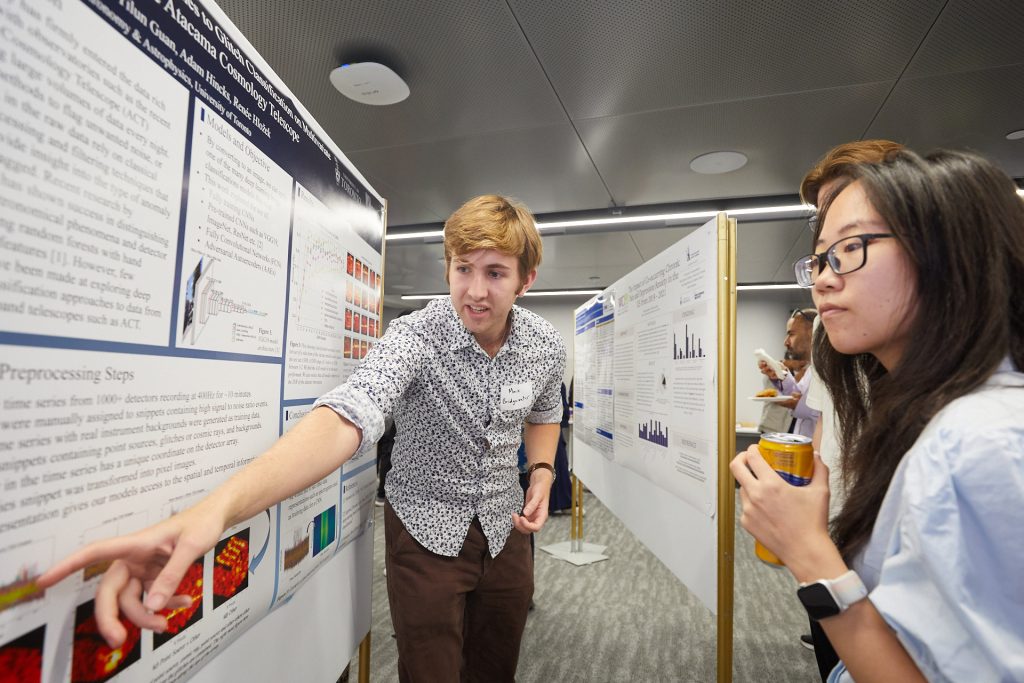
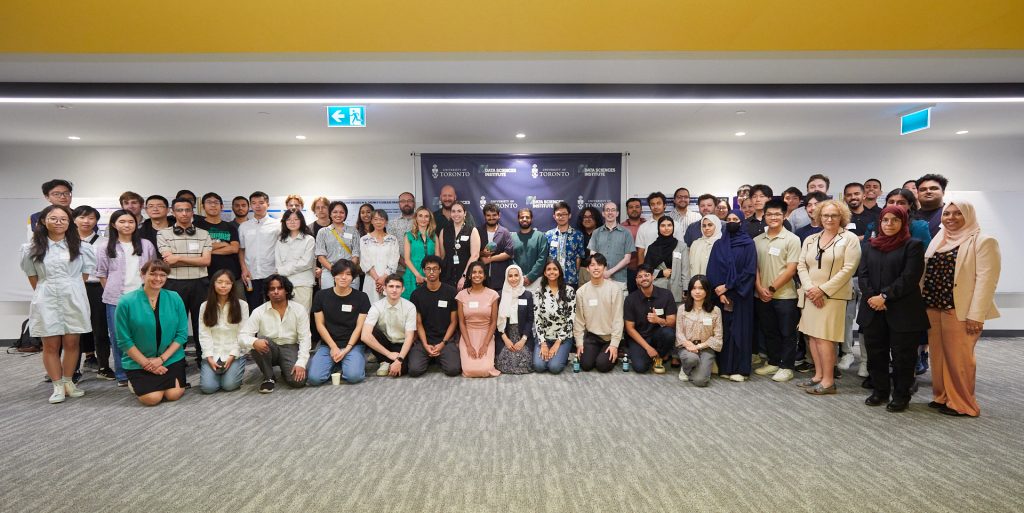
The Data Sciences Institute’s (DSI) Summer Undergraduate Data Science (SUDS) Opportunities Program recently celebrated the achievements of its 2024 cohort with the annual SUDS Showcase – an exciting full day of research project presentations and poster sessions by 57 undergraduate students.  

Designed as an annual marquee event to close the SUDS, the Showcase provides a forum for SUDS Scholars and Supervisors to share their data science research.  A highlight of the day was keynote speaker, Prof. Shion Guha (Faculty of Information and Department of Computer Science, Faculty of Arts & Science, University of Toronto, Director, Human-Centered Data Science Lab), who spoke on the topic of Deconstructing Risk in Predictive Risk Models. 
“A vibrant exhibition of the talent, the SUDS Showcase is always a great opportunity for students, supervisors and academic peers alike to connect over the many outstanding presentations, cutting-edge data science methods across a wide range of topic areas,” said Professor Laura Rosella, DSI Associate Director of Education and Training. 

“SUDS offers an excellent bridge from academic study to a professional career in data sciences and machine learning.”

David Carter, whose research entitled Mass extinctions and nocturnal behaviour: an analysis of the cryptic activity patterns of arthropod explored the link between nocturnality and evolutionary advantage in Arthropods during mass extinction events, is using data science methods and tools to construct a database of Arthropod circadian rhythms. 

“I recommend SUDS to anybody who wants to get quality research experience and develop their technical skills,” said Carter.

“I started SUDS being relatively new to coding and data analysis, and I was unconfident about my data science skills. The trainings helped me develop my skills, and I learned a lot and really enjoyed applying data science techniques to my research project.”

Ola Alyazidi’s oral presentation, Investigating the role of the X-chromosome in autoimmune diseases: A Bioinformatics Approach Leveraging Single-Cell Genomics, delved into the intricate relationship between genetics and autoimmune diseases.

“Being a SUDS scholar is a defining moment for me,” said Alyazidi. “My research journey into the role of the X chromosome in autoimmune diseases has been challenging yet incredibly rewarding.”

“This opportunity helps me to follow my dreams in bioinformatics. It is also a pivotal point in my educational journey, offering me the chance to connect with experts and advance my academic, professional, and personal growth.” 

SUDS provides a rich summer training experience for students from a wide variety of academic backgrounds to be exposed to and apply data science techniques in their work. In this year’s SUDS, under the supervision of U of T and affiliated external partner researchers, students applied data science methods and tools to research on the robustness for machine learning models, to commercial determinants of health in online gaming, mass extinctions, nocturnal behaviour, sleep modeling, neural systems, and searching for stellar streams in the milky way.

This summer, three SUDS Scholars from the University of Toronto had the opportunity to intern at Ernst & Young (EY), thanks to Mitacs funding. Through such strategic partnerships, the DSI collaborates with organizations on transformative data-driven projects. By partnering with DSI and leveraging Mitacs funding, organizations can bring on talented U of T undergraduate students to advance their data science initiatives, driving innovation and impact over the summer.

In addition, 14 students from the King Abdullah University of Science and Technology (KAUST) Academy, recipients of prestigious awards from KAUST, were selected through a highly competitive process to participate in SUDS. KAUST specifically sought out the University of Toronto for this collaboration due to its world-renowned ranking in data science.

Along with their research projects, SUDS Scholars partake of the SUDS Cohort programming for networking, academic and professional development. This includes the Data Science@Work Series, where representatives from the private sector and government organizations share data science applications in the workplace. The scholars began their studies in May with the DSI Data Science Bootcamp, gaining proficiency in data science skills including Unix Shell, R, Python, and machine learning.

“Being a SUDS scholar is a defining moment for me,” said Alyazidi. “My research journey into the role of the X chromosome in autoimmune diseases has been challenging yet incredibly rewarding.”

“This opportunity helps me to follow my dreams in bioinformatics. It is also a pivotal point in my educational journey, offering me the chance to connect with experts and advance my academic, professional, and personal growth.” 
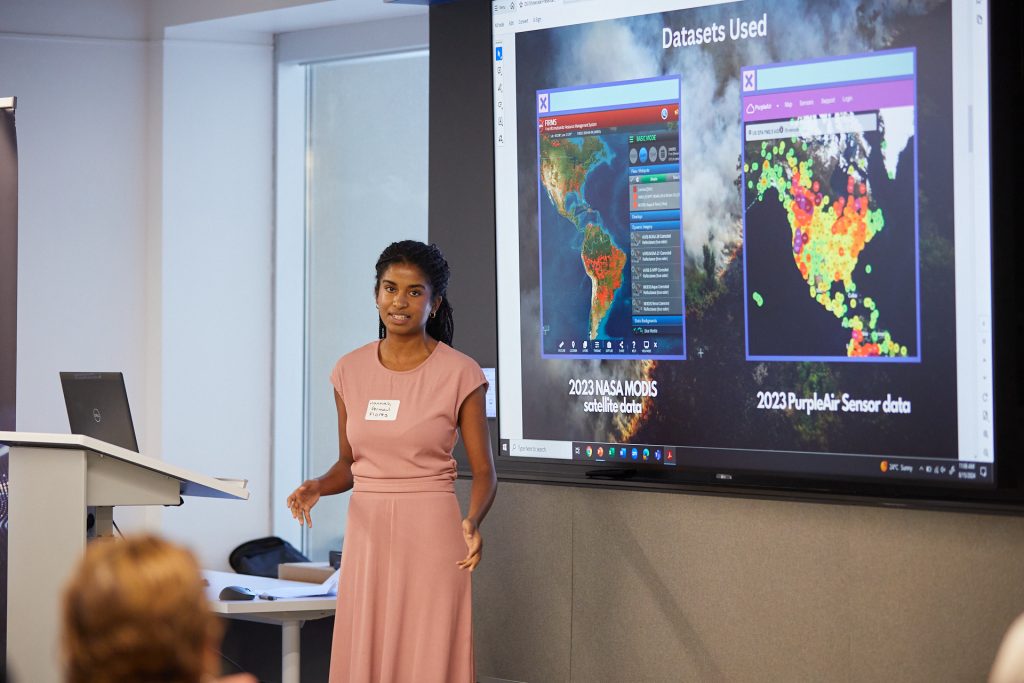
“I had a really excellent time with my student, and it was exciting to see them take advantage of all of the opportunities, workshops, and networking events within the program, and for them to become an accomplished and productive [data] scientist in just three months,” said DSI supervisor Max Shafer, Department of Cell and Systems Biology, Faculty of Arts & Science, University of Toronto.

Distinction in the poster category was given to scholars Zeke Weng, Shivesh Prakash and Waleed Adel Alsarhani, while Elliot Sicheri and David Carter were also recognized for their standout presentations.  
DSI Welcomes Undergraduate Scholars to the Summer Undergraduate Data Science Program

by Sara Elhawash

The Data Sciences Institute (DSI) is thrilled to welcome 38 undergraduate students from across Canada for an immersive data sciences research experience through the Summer Undergraduate Data Science (SUDS) research opportunity. 

SUDS Opportunities offer students the experience to apply data science methodologies and tools across diverse disciplines. Projects range from research on the robustness for machine learning models, to commercial determinants of health in online gaming, mass extinctions, nocturnal behaviour, sleep modeling, neural systems, and searching for stellar streams in the milky way. SUDS Scholars are supervised by DSI member researchers across U of T and external funding partners. Alongside their research projects, SUDS Scholars have access to a comprehensive suite of data science skills, networking events, and professional development opportunities. 

The programming for SUDS Scholars commences the week of May 6 with the DSI Data Science Bootcamp, where Scholars will gain proficiency in data science skills including Unix Shell, R, Python, and machine learning. 

Advika Gudi, a SUDS Scholar from U of T , expressed her excitement for the program, stating, “I’m looking forward to using data to tell a story – by identifying trends and measuring the impact of policies, to ultimately improve policy outcomes on society is incredibly motivating for me.”   

Rachel Way, another SUDS Scholar, will be working with Professor Spike Lee, Rotman School of Management on the project Automated Text Analysis of Fake News and Biased News. This project aims to analyze approximately 7 million news articles from around 500 media outlets to discern differences between fake news and real news in terms of moral themes, cognitive styles, antiscience attitudes, emotional valence, and other psychological characteristics. 

“The SUDS Scholar will apply automated text analysis and machine learning techniques to these articles in order to identify linguistic patterns and biases depending on how fake or real and how left-leaning or right-leaning the media outlet is,” says Professor Lee. 

“I have a passion for social data science. I am fascinated by the ability to use data to answer pressing questions in the social sciences,” says Way. 

The DSI’s cohort programming includes the Data Science@Work Series, where representatives from the private sector and government organizations share data science applications in the workplace. The program culminates in August with the DSI Showcase, during which SUDS Scholars present their research findings. 

“Our SUDS Scholars benefit from acquiring data science expertise and professional growth opportunities. We are enthusiastic about the prospect of inspiring these students and, hopefully, launching their careers in data science,” says Professor Laura Rosella, DSI Associate Director of Education and Training.   

SUDS offers students a valuable pathway to engage in high-quality and enriching data science learning, serving as stepping stone for students aspiring to build careers in data science. 

See the full list of 2024 Scholars, Supervisors and research opportunities here 

Mitacs funding to facilitate connection between industry and DSI Summer Undergraduate Data Science students

by Sara Elhawash

In today’s data-driven world, organizations face the challenge of effectively utilizing data to advance their work. Through new research funding awarded to the Data Sciences Institute (DSI) by Mitacs, DSI will connect industry with the next generation of data science leaders for Data-driven Decisions & Discovery: Innovation for Transformative Impact. The umbrella funding for 30 research internships is a reflection of the commitment by both DSI and Mitacs to equip industry and organizations, researchers and students with opportunities and skills needed to harness the power of data in real world applications.  

Mitacs, a national non-profit research organization that fosters growth and innovation, will enable academic and industry research collaborations through research internship opportunities for students in DSI’s Summer Undergraduate Data Science (SUDS) program. Mitacs funds matches industry contributions to provide stipends for students who will also participate in the SUDS data science bootcamp and professional development programming. This is an opportunity for organizations to access data science students for research internships at a rate subsidized by Mitacs.   

“DSI values the collaboration with industry and organizations,” says Professor Laura Rosella, DSI Associate Director of Education and Training. “These partnerships enrich the academic experience for students and provide our partners with access to cutting-edge research and emerging talent.”  

The four-month SUDS program provides students with data science training throughout the summer. Students engaged in industry projects benefit from participation in SUDS programming, focusing on career growth and professional development. Scholars actively take part in sessions that cover topics from scientific abstract writing to effective networking, as well as presenting their work at the SUDS Showcase in August.  

“The Institute’s collaborative environment empowers partners to make informed decisions and implement data science solutions in their operations and presents them with the opportunity to tap into a pool of skilled interns who contribute fresh perspectives, innovative ideas, and immediate value to ongoing projects,” says Sumaiya Hossain, DSI’s Partnership & Business Development Officer. “We support organizations for the Mitacs application process, and our MITACS umbrella award allows for a quick timeline from application to funding notifications.” 

As DSI continues to build bridges between academia and industry, the Institute is shaping the future of data science and contributing to the broader goal of advancing data science for societal benefit. “Our goal,” says Sumaiya “is to ensure that data science work has a real-world impact. By connecting with external partners, we facilitate a two-way exchange of knowledge and expertise.”  

Together, industry and scholars can turn data into decisions, ideas into innovations, and dreams into reality. DSI offers an exhilarating vision of a brighter, data-driven future, where collaboration, innovation and talent development converge. 

Learn more about the DSI Mitacs Accelerate funding here. 

Data Sciences Institute’s Research Day Unveils the Power of Data

by Sara Elhawash

The day-long event was filled with engaging lightning talks, poster sessions, discussions, networking activities, interactive panels, and a focus on data-driven solutions for social good. It was a celebration of the remarkable interest, participation, and collective impact achieved by the DSI community. Moreover, it provided a platform for the DSI community to showcase their work and cultivate connections with collaborators from academia, industry, and government. 

The day began with a captivating keynote address delivered by Dr. Manuel Garcia-Herranz, Data Principal Researcher, UNICEF.  He emphasized the transformative power of Frontier Data technologies and their potential to address pressing global challenges. He discussed how the diversity and volume of data are reshaping technology’s capabilities and changing the world in profound ways. 

Dr. Garcia-Herranz also highlighted the importance of addressing data inequalities, noting that data from less privileged regions is often lacking. He underscored the need to bridge the gap between data scientists and those responding to real-world emergencies. One of the key collaborations highlighted during the event was the partnership between DSI and UNICEF on the Summer Undergraduate Data Science (SUDS) program.   

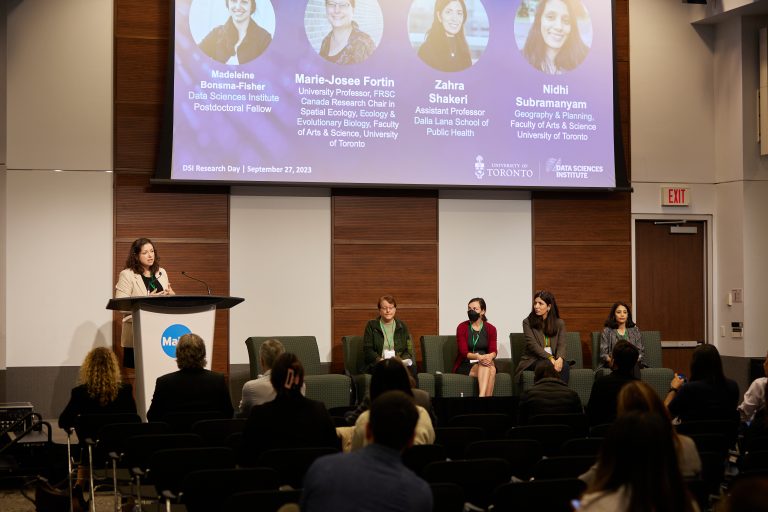
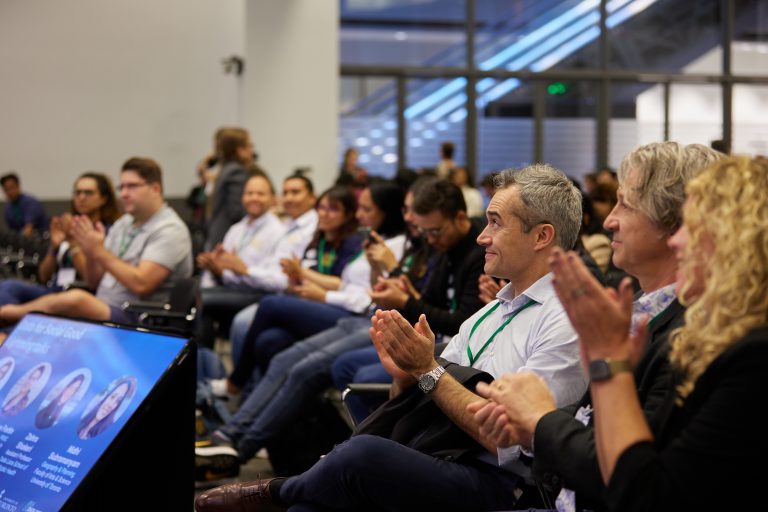
Research Day featured a series of enlightening lightning talks under the theme Data for Social Good, moderated by Bree McEwan, Associate Director, University of Toronto Mississauga, Data Sciences Institute and featured Madeleine Bonsma-Fisher, Data Sciences Institute Postdoctoral Fellow, Professor Marie-Josee Fortin FRSC, Canada Research Chair in Spatial Ecology (Department of Ecology & Evolutionary Biology, Faculty of Arts & Science), Assistant Professor Zahra Shakeri, Dalla Lana School of Public Health, Assistant Professor Nidhi Subramanyam, (Department of Geography & Planning, Faculty of Arts & Science). The talks showcased research that demonstrated how data science can improve lives and enhance human experiences. Topics ranged from equitable prioritization of active transportation infrastructure in Canadian cities to the use of anonymized movement data to assess urban park usage and more. 

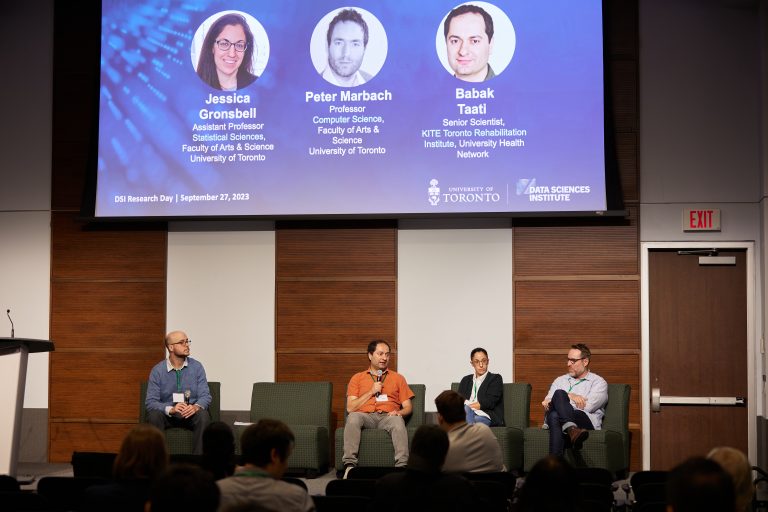
Another set of lightning talks, Methodologies in Novel Applications, moderated by Ethan Fosse (Associate Director, University of Toronto Scarborough, Data Sciences Institute) featured Assistant Professor Jessica Gronsbell (Department of Statistics, Faculty of Arts & Science), Professor Peter Marbach (Department of Computer Science, Faculty of Arts & Science), and Senior Scientist Babak Taati (KITE Toronto Rehabilitation Institute, University Health Network). Their talks delved into innovative methods applied to critical issues in health and social sciences. Topics included auditing fairness in health applications, uniting sociological theory with data science concepts, and using machine learning to assess fall risk. 

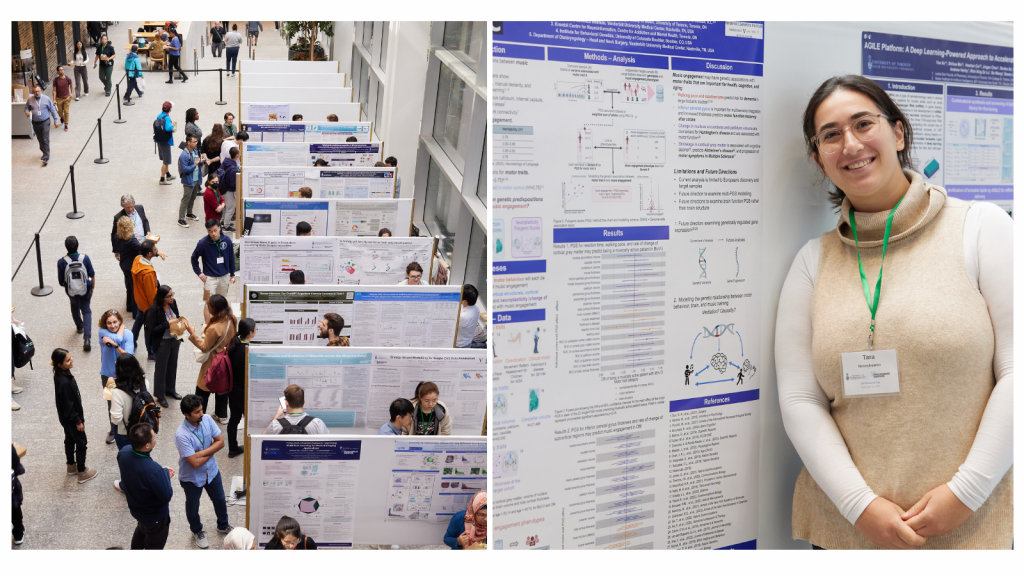
During the networking lunch, the DSI community had the opportunity to engage with the excellent work of graduate students and trainees who presented their research via posters. 

These poster projects covered a wide array of topics, showcasing the diversity of research within the DSI community. Among the poster presenters was DSI Graduate Doctoral Fellow Tara Henechowicz, who shared her work that explored the intriguing connections between genetics, motor traits, and music engagement, highlighting its impact on health, cognition and aging. The posters were a testament to the depth and breadth of research happening within the DSI community. 

Shayan Hodai, a student studying AI at George Brown College, shared his enthusiasm for the day, “My passion for machine learning and data science brought me here to explore how to best apply computational tools to health and genetic science. It was a really inspiring day.” 

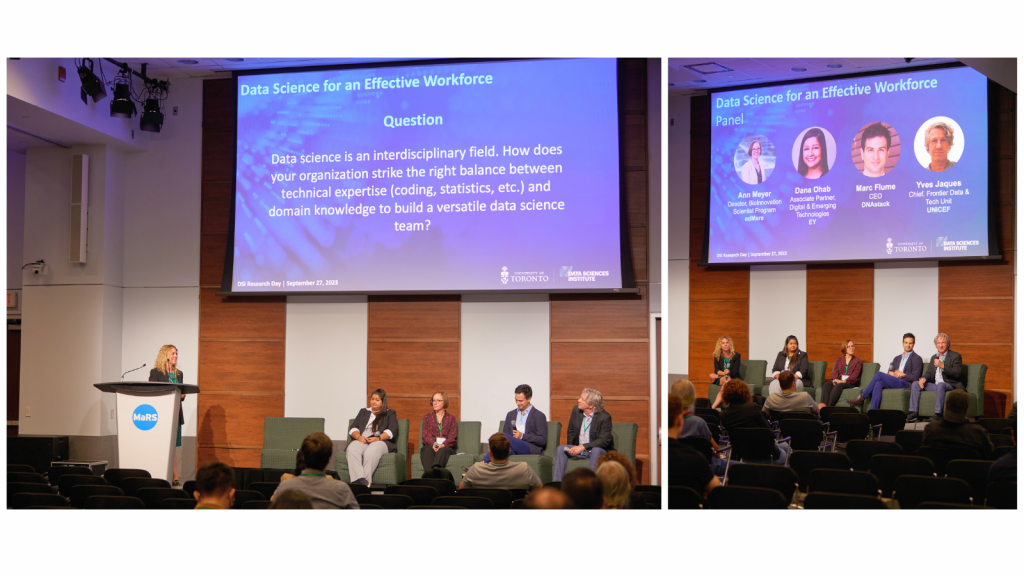
The day concluded with a panel discussion on Data Science for an Effective Workforce, moderated by Lisa Strug, Director of the Data Sciences Institute. Industry leaders from various sectors, including Yves Jaques, Chief, Frontier Data & Tech Unit at UNICEF; Ann Meyer, Director, BioInnovation Scientist Program at adMare BioInnovations; Mark Fiume, Co-Founder and CEO, DNA Stack, and Dana Ohab, Associate Partner, Digital & Emerging Technology at EY, came together to discuss how data science is reshaping workforce efficiency and effectiveness. The panel illuminated the profound impact of data science on decision-making, strategic planning, and operational excellence. 

After the panel discussion, Shefali Lathwal, new to the Toronto Data Science community, shares, “I wanted to know more about who the main players in the field are. I really liked that we had both academic researchers and industry-focused talks, especially the last panel on Data Science for an Effective Workforce. It’s nice that we looked at areas beyond generative AI and explored where else data is being applied. These are areas that don’t get much attention like big tech projects, so it was nice to hear about these projects that tell you that data science is not all about big data necessarily. There are many fields where Data Scientists are needed to solve meaningful problems.” 

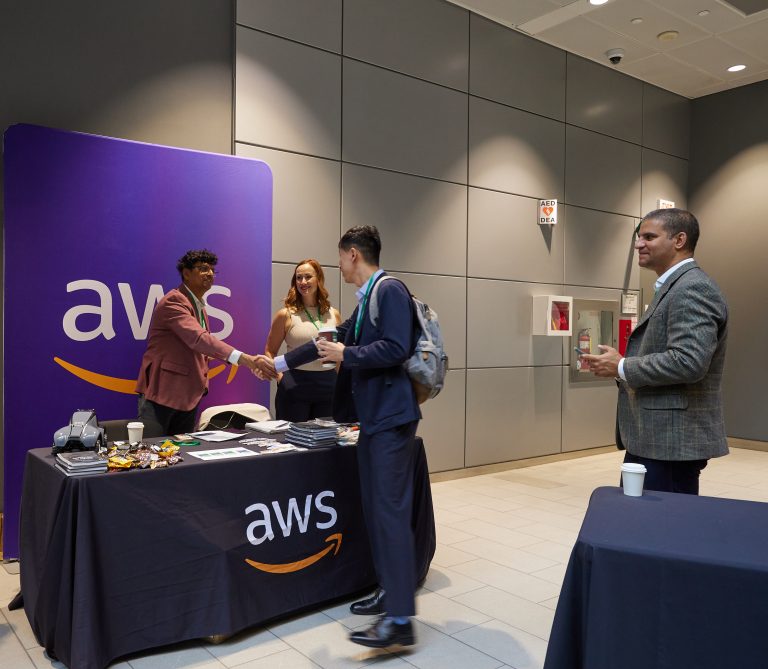
The Data Sciences Institute extends heartfelt thanks to all of its funding partners, including our gold sponsor Amazon Web Services, for their support in making this event possible. The day was a testament to the collective power of data science to shape a better tomorrow.  

To watch the video recordings, click here.  

Photos captured by Harry Choi

SUDS Scholars Showcase their Newly Acquired Data Science Skills

by Sara Elhawash

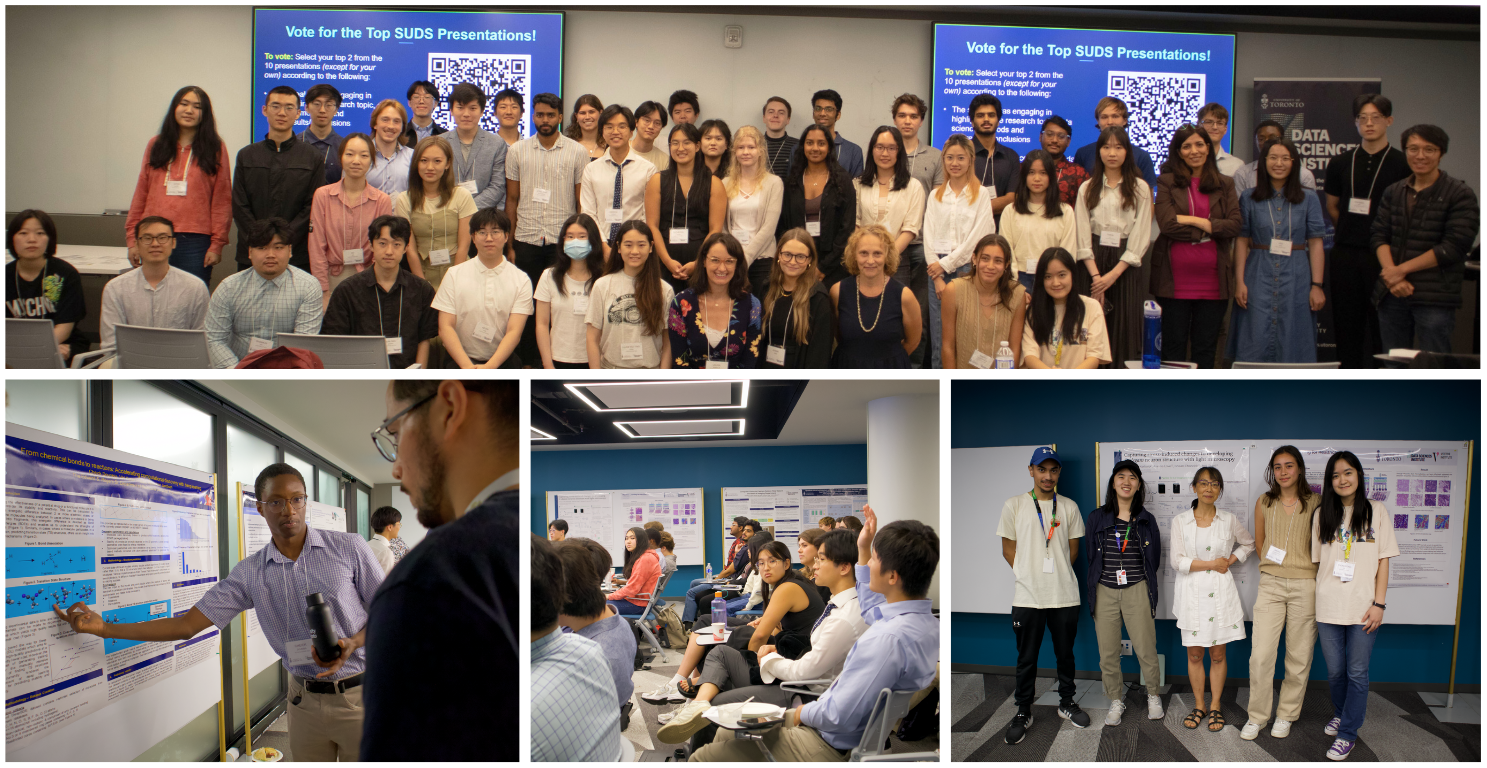
After months of dedicated data science learning and exploration, the Data Sciences Institute’s Summer Undergraduate Data Science (SUDS) Opportunities Program reached its highly anticipated finale—a full day of showcase where 37 exceptional undergraduate students unveiled their research projects. The atmosphere buzzed with a blend of excitement, eager anticipation, and unwavering enthusiasm as the culmination of their efforts took center stage. 

The SUDS program, known for its cross-disciplinary approach, provided an enriching summer experience for students to apply data science techniques in diverse fields, ranging from humanities and life sciences to engineering and public health. Supervised by Data Sciences Institute (DSI) researchers, the scholars had the chance to explore real-world applications of data science methods and tools. Their research included a diverse array of research topics, spanning from genetic covariance analysis in fruit flies, investigations into the linguistic dynamics of political discourse, to school dropout prediction using machine learning, showcasing the program’s broad spectrum of data science applications. 

In addition to their research, SUDS Scholars are provided with a full set of data sciences networking, academic, and professional development opportunities. They delved into the Data Science Bootcamp, gaining valuable skills in Unix Shell, R, Python, and Machine Learning. This technical foundation supported their research endeavors. In addition to technical training, the SUDS cohort program emphasizes career growth and professional development. The scholars participated in professional development sessions, ranging from scientific abstract writing to effective networking. Notably, they had the opportunity of learning from industry experts like Zia Babar, PhD, Director of Cloud Engineering at PwC Canada, who shared insights on Accelerating Machine Learning Development with GitHub Copilot. 

DSI’s mission is to nurture collaboration, research, and excellence in data science. Professor Laura Rosella, DSI Associate Director of Education and Training, described the showcase as the pinnacle of the scholars’ journey. “With their findings presented to their peers and supervisors, the room buzzed with excitement and celebration, encapsulating the remarkable culmination of their hard work. Without a doubt, the DSI SUDS program has launched these aspiring scholars into promising careers in Data Science.” 

“I enjoyed seeing the growth my student has achieved in just over 3 months. She is motivated to continuously work and expand her research skills and I am delighted to learn that she is planning to apply for graduate school,” says one supervisor, anonymously. 

“As is often the case when working with students outside of astrophysics, I appreciated the fresh perspective on our research area from a student arriving without preconceptions about the field. They were eager to learn and highly professional in their conduct, making the research project a breeze,” says another supervisor, anonymously. 

The SUDS showcase offered a platform for the scholars to share their final findings and also allowed students to recognize their peers’ exceptional posters and presentations. Awards were given out to Shuyu Van Kerkwijk, Anton Sugolov and Nicholas Taylor for their exceptional posters, while Sanchaai Mathiyarasan and Akil Huang were celebrated for their outstanding presentations. 

SUDS Scholars praise the research opportunities and SUDS cohort program 

Nicholas Taylor, who was voted for a top poster for his project, Quantum Machine Learning for Regression Tasks in Computational Chemistry, tackled the challenge of balancing accuracy and computational cost in chemical property predictions. He explains, “Such information holds significant implications for drug discovery and material science.” Reflecting on his experience, Nicholas says, “From not knowing the first thing about academic research to building quantum machine learning methods, I’ve learned a lot that I can take with me to future applications.” 

Lu Huang, who has been diligently dedicated to her research project, Bayesian Analysis of the Genetic Covariance Between Mating Success and Fitness in Drosophila serrata, aims to uncover the genetic interrelation between mating success and fitness in fruit flies. The goal is to ascertain whether mating success can serve as a viable indicator of overall fitness in the context of evolutionary studies. Existing research suggests that female Drosophila serrata possess the capacity to assess and choose mates based on olfactory and chemical cues. 

Reflecting on the program, Lu Huang says, “The weekly seminars provided a valuable opportunity for people from different backgrounds to engage in discussions about the daily tasks of data scientists, enhance networking skills, and strategize for resume improvement. It was a great learning opportunity.” 

One research project emerging from the SUDS program focused on School Dropout Prediction Using Machine Learning: An Interactive Presentation of the Evolving Landscape. Ziqi Shu collaborated with Professor Zahra Shakeri from the Dalla Lana School of Public Health at U of T, alongside Dr. Manuel Garcia-Herranz, a Data Principal Researcher at UNICEF, and Karen Avanesyan, a Statistics and Monitoring Education Specialist from the Division of Data, Analytics, Planning and Monitoring at UNICEF. Their collective effort aimed to combat school dropout rates through the utilization of data science. Notably, this venture marked one of the program’s initial steps toward external partnerships. Encouraged by this growing network, the SUDS program envisions an expansion of such projects and looks forward to fostering collaborations with diverse organizations. 

“Through this program, I understood how AI can address vital educational challenges by working on real-world cases. It gave me a sense of purpose, knowing my work could contribute to improving education access worldwide,” says Ziqi Shu.