SUDS story

Unlocking the Power of Data: DSI and UNICEF Collaborate to Advance Data Science Research and Training

by Sara Elhawash

In a significant collaboration aimed at advancing data science research and training, the Data Sciences Institute (DSI) at the University of Toronto is partnering with the United Nations Children’s Fund (UNICEF)’s Frontier Data and Tech team to leverage data for addressing complex challenges concerning children. This collaborative effort aligns with DSI’s strategic goal of fostering knowledge mobilization to promote the greater public good. This partnership represents a significant milestone in the journey towards leveraging the immense potential of data for effecting positive social change.  

DSI will work with UNICEF to strengthen UNICEF’s knowledge and capacities to use data science and methodologies to innovate learning, through joint research and training. This collaboration will involve joint research and training initiatives.  DSI collaborates with organizations committed to supporting world-class researchers, educators, and trainees who are at the forefront of advancing data sciences.  

“This partnership is a significant milestone for our Frontier Data Network, a global community of practice that leverages data science to positively impact the lives of children worldwide. Together, we are poised to unlock new insights, drive evidence-based decision-making, and pave the way to a brighter future for children everywhere,” says Yves Jaques, Chief of the Frontier Data and Technology Unit, UNICEF. 

As a first collaboration, Dr. Manuel Garcia-Herranz, Data Principal Researcher and Karen Avanesyan, Statistics and Monitoring education specialist at UNICEF’s Division of Data, Analytics, Planning and Monitoring (DAPM) at UNICEF, are collaborating with Professor Zahra Shakeri, Dalla Lana School of Public Health on a 2023 Summer Undergraduate Data Science (SUDS) Opportunities Program. The SUDS project, Understanding Predictive Models that can be Used to Prevent School Dropouts aims to revolutionize early warning systems in education through the application of cutting-edge AI technology. The SUDS opportunity allows a SUDS Scholar, Ziqi Shu, to gain practical experience by working on fictional yet reality-based case studies focusing on social problems affecting children. By identifying at-risk students and schools with high dropout rates, UNICEF aims to support countries with a strong Education Management Information System (EMIS) and household survey data.  

The SUDS Scholar project aims to use and generate new sources of real-time information to better inform decision makers in the development and humanitarian ecosystem. UNICEF’s Frontier Data Tech Network is a global initiative to explore and use frontier data technologies to address the most complex challenges for children in an ethical way.  

“Our aim is to develop a pilot tool that provides a comprehensive representation of the machine learning-based school dropout prediction landscape, bridging the knowledge gap in this area. This tool will utilize innovative data analysis and visualization techniques, benefiting researchers, practitioners, and other stakeholders in exploring the factors influencing school dropout among children. The long-term goal of this project is to harness the power of data science and create an adaptable, publicly accessible system that could support countries in addressing the critical issue of school dropouts. By leveraging AI technology and early warning systems, our aim is to identify and support at-risk students and schools, ultimately safeguarding every child’s right to education,” says Zahra Shakeri, Director of HIVE Lab, Institute of Health Policy, Management, and Evaluation, Dalla Lana School of Public Health. 

The UNICEF-DSI partnership paves the way for further research and training collaborations. There will be opportunities to connect with the DSI community during its DSI Research Day on September 27, 2023. Dr. Manuel Garcia-Herranz will deliver the keynote address and Yves Jaques will participate in a panel discussion on Developing an Effective Data Science Workforce. The discussion will focus on equipping graduates with essential Data Science skills required in today’s diverse fields and industries. The DSI Research Day showcases the work of the DSI community, fostering connections and engagement among academia, industry, and government stakeholders. 

“By combining our community’s expertise in data science with UNICEF’s commitment to driving results for children globally, we have the opportunity to make a profound impact. Through our joint efforts, we aim to strengthen UNICEF’s knowledge and capacities in utilizing data science methodologies, fostering innovation in learning and ultimately creating a brighter future for children worldwide,” says Lisa Strug, Director, Data Sciences Institute.  
DSI Summer Undergraduate Data Science Program Empowers Students to Apply Data Science Skills Across Disciplines

by Sara Elhawash

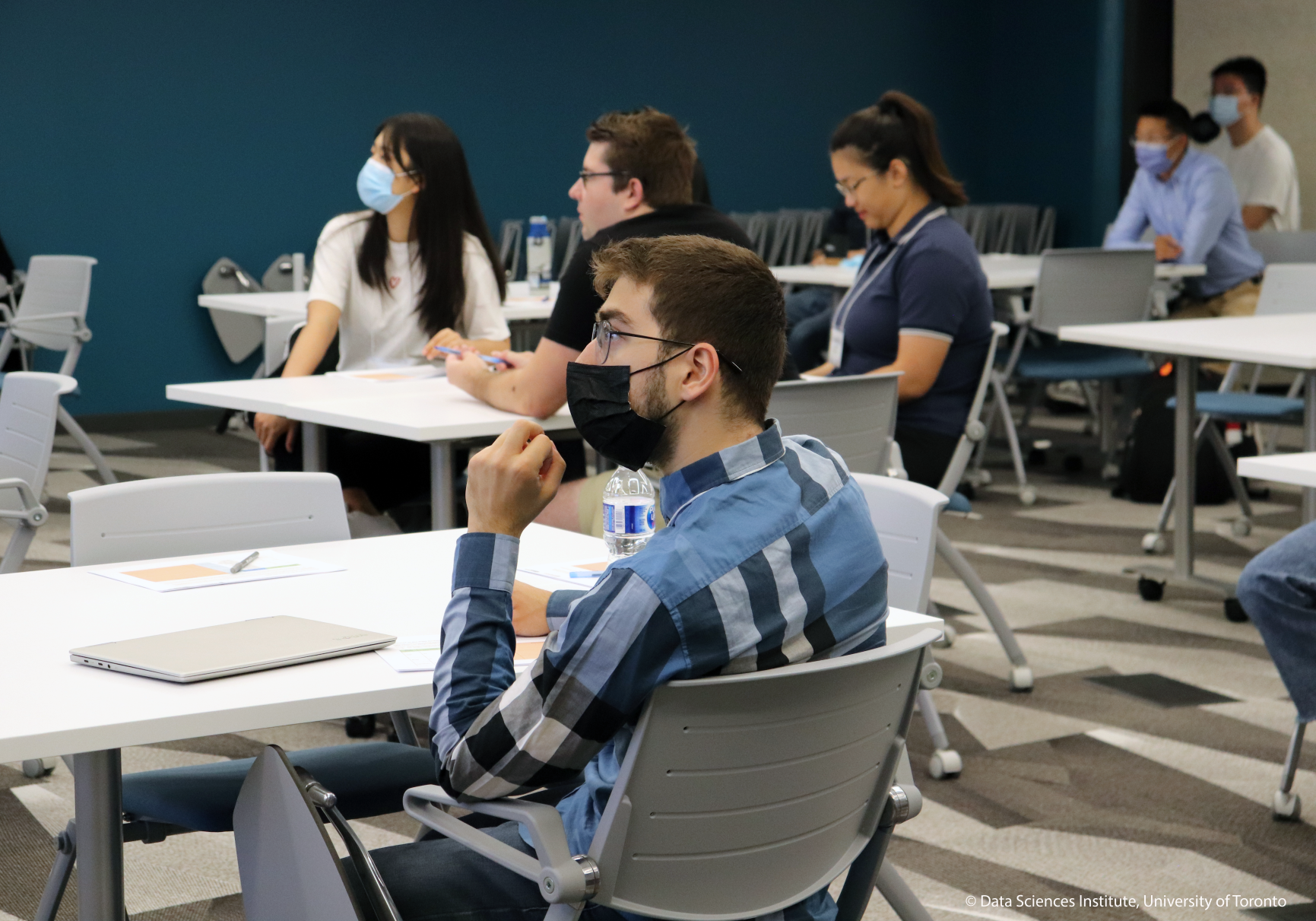
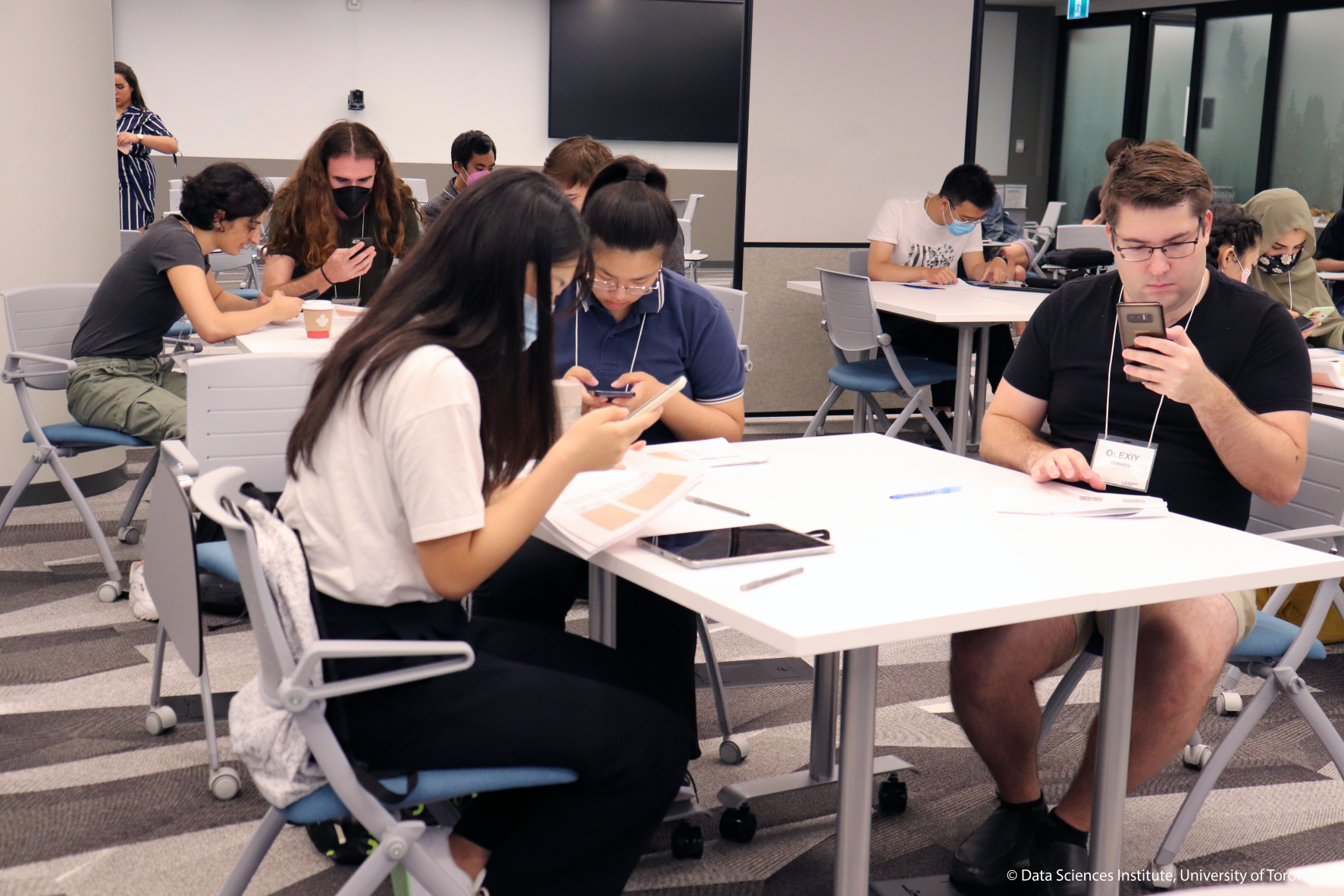
This summer, a group of 37 undergraduate students from across Canada will participate in the Data Sciences Institute (DSI) Summer Undergraduate Data Science (SUDS) research opportunity. SUDS offers an enriching summer experience to apply data science methods and tools in various application areas, including humanities, life science, engineering, public health and more. SUDS Scholars are supervised by DSI member researchers across U of T and external funding partners. In addition to their research projects, SUDS Scholars are provided with a full set of data science skills, networking, research and professional development opportunities. 

The SUDS Scholars kicked off their summer programming on May 1 by participating in their welcome and orientation where they met their cohort and shared their research interests. This week, they will also be gaining new skills and knowledge via the Data Science Bootcamp for introductions to Unix Shell, R, Python, and Machine Learning.   

SUDS Scholar Yuanhan Peng, expressed enthusiasm about the program, noting she is “currently strongly interested in education data science and I want to work as a data scientist in the education technology industry. I think that being a SUDS Scholar will provide me with the opportunity to participate in related research and gain more experience.”  

SUDS Scholar, Akil Huang, will be working with Professor Spike Lee, Rotman School of Management on the project, Automated text analysis of liberal and conservative news, which explores the nature of linguistic differences among news outlets. Huang is looking forward to the summer: “As a finance and economics specialist coming from an interdisciplinary background, SUDS will give me the tools, learning resources, and mentorship to delve deeper into my area of focus within academia. I’m really looking forward to the bootcamp in the beginning of the program.” 

Over the next twelve weeks, the Scholars will engage on their data science research projects and attend the DSI cohort programming. The programming includes the Data Science@Work Series where members from the private sector and government organizations discuss data science in the workplace.  

Professor Kuan Liu, Dalla Lana School of Public Health and SUDS supervisor shares, “The DSI SUDS program provides unique hands-on research and learning experiences in data science that help students gain exposure to cutting-edge research topics spanning a wide range of disciplines and develop critical scientific communication, computation, and problem-solving skills. It was a great pleasure working with the SUDS scholar this past summer and I am excited to take part in the program again this year.” 

The program will conclude in August with the DSI Research Day, where the SUDS Scholar cohort will showcase their research.

Professor Laura Rosella, DSI Associate Director of Education and Training, shares that “As we welcome the new cohort of students, we are excited to see their passion and curiosity. Besides engaging in research projects, our SUDS Scholars benefit from acquiring data science expertise and professional growth opportunities. We are enthusiastic about the prospect of inspiring these students and, hopefully, launching their careers in data science. They are an outstanding group indeed.”  

The SUDS research opportunity is an excellent way for students to get involved in high-quality and enriching data science learning and to experience the application of data science methods and tools in various fields. It provides an opportunity for students to build their careers in data science. 

A summer of learning, fun and community for 2022 DSI SUDS Scholars

The Data Sciences Institute (DSI) welcomed 35 carefully selected undergraduate students from across Canada for a rich data sciences research experience. The Summer Undergraduate Data Science (SUDS) Opportunities Program is a great way for undergraduate students to engage in hands-on research led by DSI member faculty and scientists. The program has a cross-disciplinary approach, applying data science skills in various fields including the humanities, life science, engineering, public health, and more.

“The DSI SUDS program is about inspiring the next generation of data scientists and giving undergraduate students the chance to explore data science as a career. In addition to their research projects, SUDS Scholars are provided with data science skills and professional development opportunities. We couldn’t be more thrilled to have the chance to inspire them and hopefully kickstart their careers in this exciting field. They are truly an exceptional bunch!” says Laura Rosella, DSI associate director of education and training.

Interested in proposing a SUDS research opportunity? Applications are now open!

Student applications open on December 19, 2022, for the 2023 SUDS opportunities.

SUDS Scholars praise the program

SUDS Scholars participated in weekly speaker seminars, data science skills, and professional development opportunities. They had numerous networking events where they got to know more about the wide variety of SUDS projects. They also requested an easier way to stay in touch and connect. To accommodate this request the DSI set up a Zoom Chat channel.

“We were so excited to see that the Scholars wanted to stay in touch, network, and learn from each other. It was so great to see a community form. We look forward to our 2023 SUDS program and continue to support this community of students from diverse backgrounds,” says Wenzhe Xu, DSI’s programming coordinator and SUDS officer.

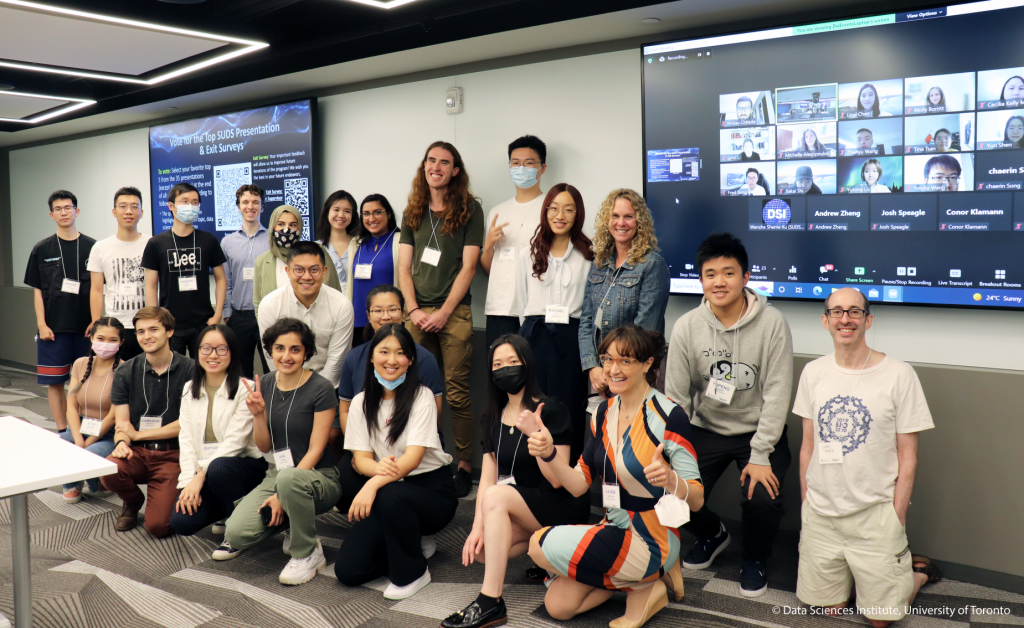
Scholars presented their research projects and data methods at SUDS Research Day, where students also voted for the best presentation. This year’s winner was Lauren Gill from the University of British Columbia who was studying Data Science for White Shark Conservation with Vianey Leos Barajas an assistant professor in the Department of Statistical Sciences at the Faculty of Arts & Science.

Group photo from SUDS Research Day,

Other 2022 SUDS scholars included Yingke Wang who was working with Rahul Krishnan, an assistant professor in the Department of Computer Science and the Department of Laboratory Medicine & Pathobiology within the Temerty Faculty of Medicine, on machine learning for chronic disease management. 

“Thanks to SUDS, I had the opportunity to learn how to combine machine learning algorithms in the healthcare industry as well as explore survival analysis. Plus, the self-learning skills I gained will be essential to me for approaching graduate study,” says Wang, a member of St. Michael’s College.

“It's been wonderful to see the support that SUDS provides to young scholars like Yingke,” says Krishnan. “Introducing students to research early is an important step for them to see the opportunities that graduate study can provide."

SUDS scholar and Innis College member, Tina Tsan worked with Ulrich Wortmann, an associate professor in the Department of Earth Sciences at the Faculty of Arts & Science, on an analysis of why the last ice age came to a sudden end.

“For me, the biggest reward from the SUDS program has been how it’s broadened my perspective and understanding of what data science is and how it's used in different fields,” Tsan says.

SUDS scholar Anthony McCanny, a member of Victoria College where he was a Northrop Frye Centre Undergraduate Fellow, worked with Felix Cheung, an assistant professor in the Department of Psychology at the Faculty of Arts & Science. They explored whether gross domestic product (GDP) is a good measure of economic and societal success, and what type of government spending improves the lives of citizens.  

“The SUDS program filled my summer with an unbelievable amount of learning, fun, joy and community,” says McCanny. “I’ve been very lucky in Professor Cheung’s lab to have the freedom to conduct my own research, paired with great guidance. It’s hard not to feel like this summer has redefined my path in life, filling me with enthusiasm for a career in research, and connecting me with people that I hope I get to keep working with.”